
 JOIN THE CHAMBER
 BUSINESS DIRECTORY
 EVENTS CALENDAR
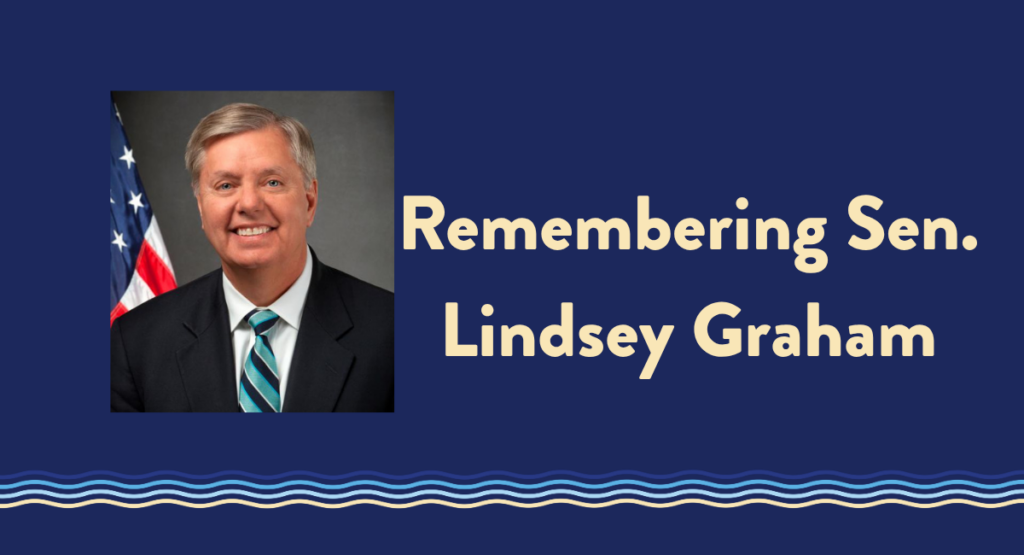
For more than 30 years in the United States Senate, Lindsey Graham was one of the Grand Strand’s most steadfast advocates in Washington, D.C. On Sunday, July 13, upon hearing of his passing, Myrtle Beach Area Chamber of Commerce President Jimmy Gray stated:
“We are deeply saddened by Sen. Lindsey Graham’s passing and send our deepest condolences to his family, friends and staff. Graham was a fierce advocate for South Carolina and a longtime friend to the chamber and business community.
Throughout his three decades of service, he championed investments that strengthened our state’s economy, improved critical infrastructure and enhanced the quality of life for South Carolinians.
In the Myrtle Beach area, his support for federal investments in our beaches, transportation infrastructure, public safety and water resources helped position our region for continued growth and prosperity. He leaves a legacy that will benefit communities across our state for generations to come.”
While Sen. Graham’s influence extended across the state and nation, the Grand Strand experienced firsthand the impact of his leadership through investments that continue to shape the region today. Graham especially understood the importance of the area’s ecosystem, championing projects for stormwater management by securing federal funding for ocean outfalls and maintenance dredging of Murrells Inlet to preserve safe navigation for commercial fishermen and recreational boaters.
Most recently, Graham helped advance Horry County’s 2026 beach renourishment project, a fully federally funded $72 million project led by the U.S. Army Corps of Engineers to rebuild the shoreline after Hurricanes Ian in 2022 and Tropical Storm Debby in 2024. The project is one of several beach enhancement projects that Graham advocated for during his tenure.
In March 2025, the senator met with local leaders in Carolina Forest, touring areas impacted by the spring wildfire that burned over 2,000 acres. Graham pushed Federal Emergency Management Agency to reverse its initial denial of a Fire Management Assistance Grant, which was approved the following day to help cover firefighting costs. Graham spoke about the wildfire’s impact on the area’s economy, noting that while no homes were lost, widespread media coverage deterred visitor activity, hurting local businesses.
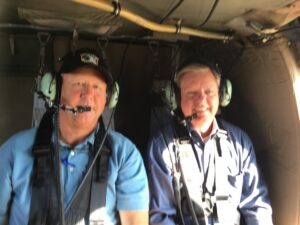 Chamber Advocacy Council Chair Mark Lazarus recalled when he and Graham surveyed the widespread damage of Hurricane Matthew in 2016, when record flooding devastated communities across the county. At the time, Lazarus was chairman of the Horry County Council and noted the occasion was one of the many times the senator provided assistance to the region. “Whether with the FAA for our airport, emergency beach renourishment funds, hurricane recovery or road funds, Lindsey was always there for Horry County. He became a great friend.”
As Lazarus mentioned, Graham was an early advocate for expanding Myrtle Beach International Airport, recognizing that air service would be critical to the region’s economic growth and tourism industry. Throughout the early 2000s, he helped secure multiple Federal Aviation Administration (FAA) grants worth millions of dollars to support airport improvements, including funding for terminal upgrades, taxiway rehabilitation and airfield safety enhancements.
Along with air service, Graham was a longtime champion for an interstate connector between Horry County and the Pee Dee region, viewing the project as critical for economic development, freight movement and hurricane evacuation. In announcing his request for $12 million in federal funding for right-of-way acquisition for an interstate in 2021, Graham said, “I believe it is a critical infrastructure project for the Grand Strand and the state of South Carolina as a whole. The Grand Strand is a cash cow for the state, and I am determined to help provide a better means of transportation for those traveling to and from this tourist destination.”
Understanding the importance of the region’s tourism economy depended on a reliable seasonal workforce, he consistently advocated for the H-2B temporary worker program, repeatedly urging federal officials to provide additional visas when annual caps were reached. He also supported the J-1 Exchange Visitor program, recognizing its importance in bringing international students to Myrtle Beach each summer to help businesses meet peak demand while fostering cultural exchange.
Last December, the chamber organized a trip to Washington, D.C., bringing together business, education and civic leaders from across the Grand Strand to discuss our region’s future. The delegation met with Sen. Graham, along with Sen. Tim Scott and Rep. Russell Fry, to highlight regional priorities like economic development, workforce needs, infrastructure, the state of tourism and overall community vitality.
Lori Heafner, Ph.D., Vice President of Institutional Effectiveness and Development at Horry-Georgetown Technical College and Chamber Board Chair, was among those in the meeting.
“We had productive conversations with Senators Graham and Scott, Rep. Russell Fry, and the leadership at the U.S. Chamber of Commerce about issues that matter to all of us along the Grand Strand. I’m grateful for the opportunity to have met with Sen. Graham and to advocate for our region. The trip underscored the value of collaboration among governments, education partners and the business community.”
By securing federal funding and advancing policies that supported these and other projects, Graham helped to solidify the environmental and economic resilience of the Grand Strand for generations to come.